Beyond the Surface: Advanced Techniques for Identifying Counterfeit Pokemon Cards
Navigating the secondary market for trading cards can be treacherous for both new and experienced collectors. Knowing how to distinguish genuine pulls from high-quality replicas is essential to protect your investment and maintain the integrity of your binder.
The Anatomy of a Genuine Pokemon Card
Material Composition and Layers
Genuine Pokemon cards are manufactured using a specific process involving layers of cardstock with an opaque inner core. Authentic cards are dense, durable, and possess a distinct feel that mimics high-quality paper board. Counterfeits often feel like thin, flimsy printer paper or overly glossy plastic that lacks the structural integrity of an official product.
The Light Test Explained
One reliable, non-invasive method for testing authenticity is the light test. By holding a smartphone flashlight behind your card, you can observe the opacity of the layers. Authentic cards typically block the majority of light, whereas many counterfeits allow significant light to pass through due to lower-quality cardstock.
Recognizing Common Counterfeit Red Flags
Assessing Print Quality and Coloration
Official cards undergo high-resolution printing processes that result in crisp text and vibrant, consistent colors. If you notice blurry text, bleeding ink, or color palettes that look washed out, the card is likely a fake. Always compare suspect cards against a known authentic version from the same set to verify color accuracy.
The Texture and Holographic Pattern
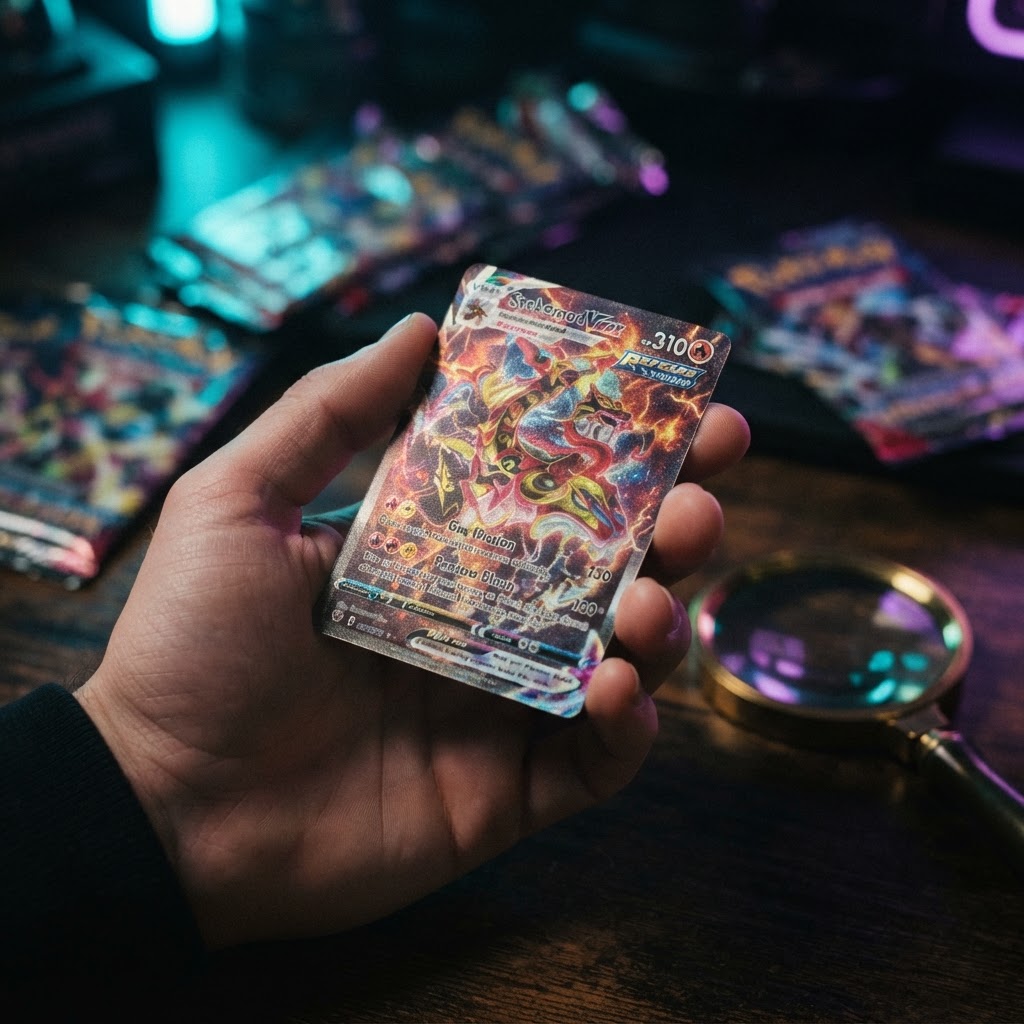
Modern ultra-rare cards, such as VMAX or Illustration Rares, almost always feature a complex, etched surface texture. If your card is supposed to have texture but appears perfectly flat and shiny, you are likely holding a counterfeit. Furthermore, genuine holographic patterns should appear layered and deep, rather than like a flat sticker.
| Feature | Authentic Card | Counterfeit Card | | :--- | :--- | :--- | | Texture | Deep, etched patterns | Flat, smooth surface | | Back Color | Rich, deep purples/blues | Faded, pixelated mess | | Light Test | Mostly opaque | High translucency | | Font Quality | Crisp, clear text | Blurry, pixelated |
The Importance of Professional Grading
Verifying Your Collection's Value
When you own rare, high-value pulls, professional authentication provides the ultimate peace of mind. Getting your cards graded by reputable companies ensures they are not only genuine but also preserved for the long term. For more insights on this process, check out our guide on Beyond the Binder: Understanding Pokemon Card Grading and Market Value.
Spotting Fakes in Online Listings
Online marketplaces are notorious for hosting listings with stock photos rather than actual product images. Always request clear, close-up photos of the card's back and edges before finalizing a purchase. If a deal seems too good to be true, it likely involves a counterfeit product.
Why Digital Openings Offer Safety
Avoiding Scams with Online Rips
Participating in online pack opening platforms removes the risk of receiving counterfeit cards physically sent to your home. Platforms like Let's Go! provide a secure, transparent environment to open verified booster packs. This is a great alternative for collectors who want to enjoy the thrill of the pull without the headache of authentication.
Essential Authentication Checklist
Quick Tips for Every Collector
- Check the card back for consistent blue and purple saturation.
- Ensure the font matches the official Pokemon TCG style guidelines.
- Look for the copyright date and set symbol on the bottom corner.
- Verify that the edges are cut cleanly without jagged white remnants.
- Confirm the presence of tactile texture on all V, VMAX, or GX cards.
The most important rule in collecting is simple: if the card lacks the specific texture and depth of an official release, do not add it to your collection.
Frequently Asked Questions
Can all fake cards be detected by sight alone?
While many counterfeits are obvious, some modern high-end replicas are incredibly convincing to the naked eye. Utilizing a magnifying loop to check for the CMYK print pattern can often reveal a fake that looks otherwise perfect.
Why do some fake cards have better quality than others?
Counterfeiters often improve their production techniques based on community feedback and high-resolution scans. Even if the quality seems impressive, the lack of authentic holographic patterns or cardstock density usually gives them away.
Does a card with a spelling error mean it is fake?
Yes, legitimate cards undergo strict quality control, making spelling errors extremely rare. If you find a card with misspelled attack names or trainer instructions, it is almost certainly a counterfeit product produced in a mass-market factory.
Start Your Collection Safely
Experience the excitement of opening genuine Pokemon packs from the comfort of your home with Let's Go! today. Join now using referral code UZK39ZmTbh to claim your exclusive Friends Edition pack and build your collection with 100% authentic cards.
Grab This Deal
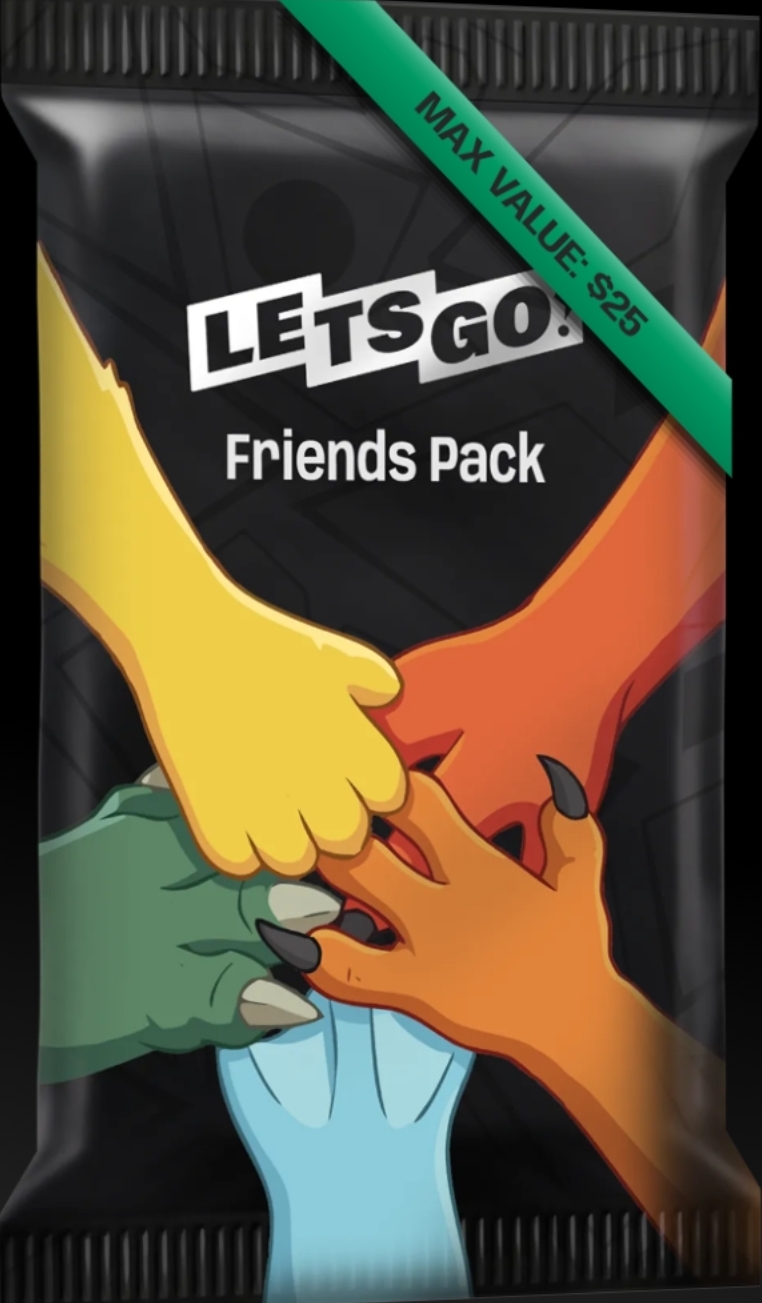
Free exclusive Friends Edition pack when you join!
Join LETSGO with this code and you'll both score an exclusive Friends Edition pack.
Enter this code at signup — the bonus won't apply without it.