Beyond the Rip: How to Expertly Detect Counterfeit Pokemon Cards
Navigating the secondary market can be daunting when you are worried about the authenticity of your potential additions. Learning how to identify nuances in printing and materials is an essential skill for any serious collector looking to grow their inventory safely. By mastering these inspection techniques, you can avoid common pitfalls and keep your collection authentic.
The Anatomy of an Authentic Pokemon Card
Printing Patterns and Dot Matrix
Modern Pokemon cards are produced using high-precision offset printing presses. If you use a jeweler's loupe, you will see a specific pattern of CMYK color dots that appear uniform and crisp. Counterfeiters often use standard inkjet printers which result in blurry, pixelated edges or disjointed ink blobs.
The Back of the Card
One of the most reliable ways to spot a fake is looking at the back of the card. Authentic cards feature a complex mix of dark and light blues, often showing a distinct swirl pattern in the center. Fakes frequently use a flat, washed-out purple or light blue hue that lacks the depth of a legitimate print.
Texture and Material Analysis
The Importance of Surface Texture
Modern chase cards like Ultra Rares and Secret Rares feature sophisticated, etched surface textures. If a card is supposed to have a ridges or patterns and arrives perfectly smooth, it is almost certainly a counterfeit. Always compare your card against known high-resolution images of the specific set release.
The Light Test
Authentic cards are composed of a specific cardstock core that does not allow much light to pass through. If you hold your card up to a bright flashlight, a genuine card should block almost all light. If the card appears translucent or shows clear light penetration, it likely lacks the proper density and layering.
Common Counterfeit Indicators
Visual Red Flags to Watch
- Misspelled words or incorrect attack damage values.
- Shiny card surfaces that lack proper foil refraction.
- Incorrect font styles compared to original sets.
- Rounded corners that look jagged or unevenly cut.
Comparing Quality Standards
| Feature | Authentic Card | Counterfeit Card | | :--- | :--- | :--- | | Texture | Deep, etched patterns | Smooth or printed texture | | Back Color | Rich blue/purple depth | Washed out or purple-tinted | | Cardstock | Opaque and sturdy | Translucent or flimsy | | Font | Crisp and thin | Blurry or bold blocky |
Safeguarding Your Collection Strategy
Utilizing Trusted Sources
Building a collection requires vigilance, especially when buying single cards from unverified sellers. For those who prefer the thrill of discovery without the risk of handling forged materials, platforms like Tilt Rips provide a verified, digital alternative. You can even try your luck by visiting Tilt Rips to earn a free pack today.
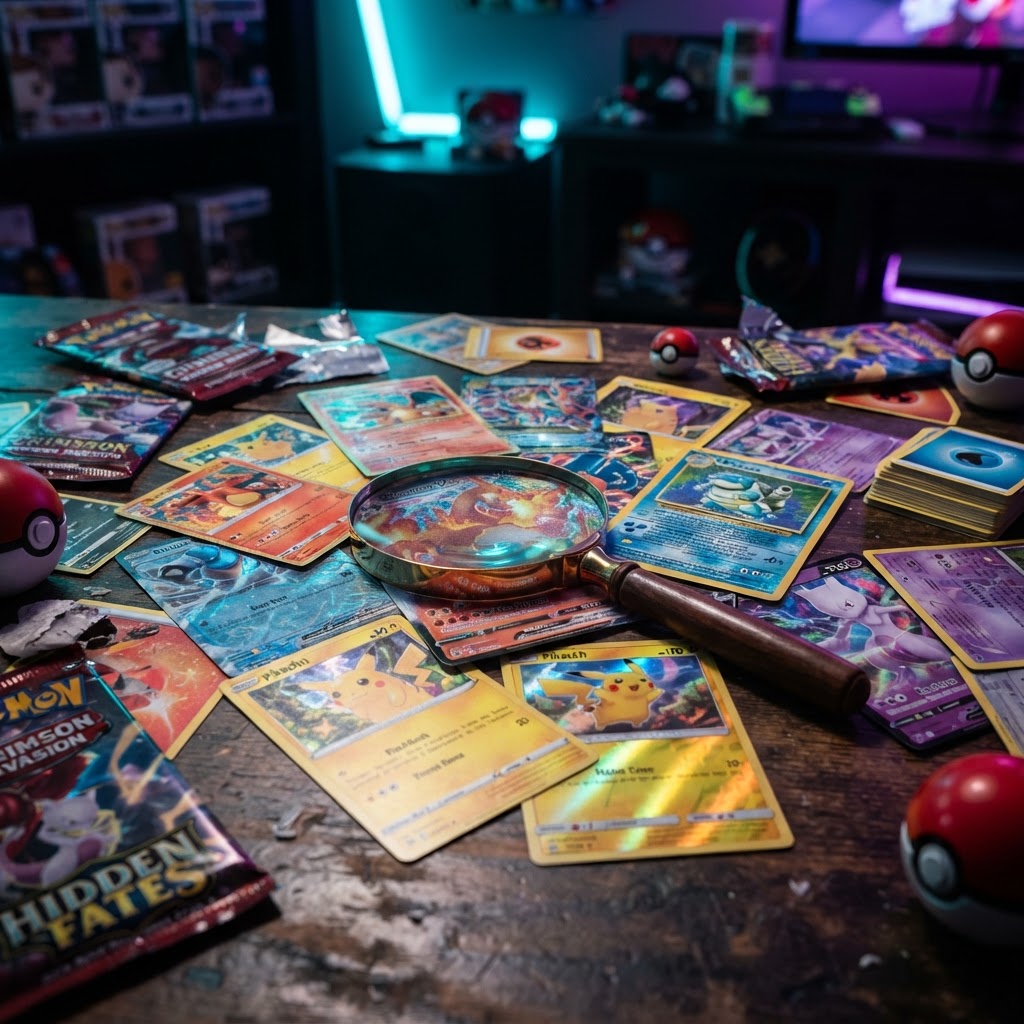
Always verify your high-value cards under a magnification tool to ensure the ink layers match the official printing standards of the Pokemon Company.
Diversifying Your Acquisition Methods
Collectors often debate whether to stick to vintage or modern sets, but the risks of counterfeit goods exist in both sectors. As discussed in Vintage vs Modern Pokemon Cards: A Collector's Guide to WOTC Era vs Today, your approach to buying depends on your risk tolerance. Balancing your portfolio with digital assets can mitigate the stress of physical authentication requirements.
Frequently Asked Questions
How do I check for fake cards without a loupe?
You can start by checking the back of the card for color consistency and ensuring the surface has the proper texture. If the card feels significantly lighter or more flexible than your other cards, it is likely a poor-quality reproduction.
Are all holographic cards real?
No, many counterfeiters add cheap holographic film to standard cards to make them appear more valuable. Always look for the specific holo pattern associated with the card's release, as many fakes use generic patterns that do not match original designs.
Should I worry about graded cards being fake?
While slabbed cards are safer, counterfeiters sometimes attempt to forge the labels and cases themselves. Always check the serial number on the grading company's database to verify that the card details match the actual slab in your hand.
Take Action Today
Ready to experience the excitement of pack openings without the fear of handling counterfeit merchandise? Join the community at Tilt Rips and use referral code U7S8AJ3V to claim your free pack today.
Grab This Deal
Earn a Free Pack Today!
Enter this code at signup — the bonus won't apply without it.