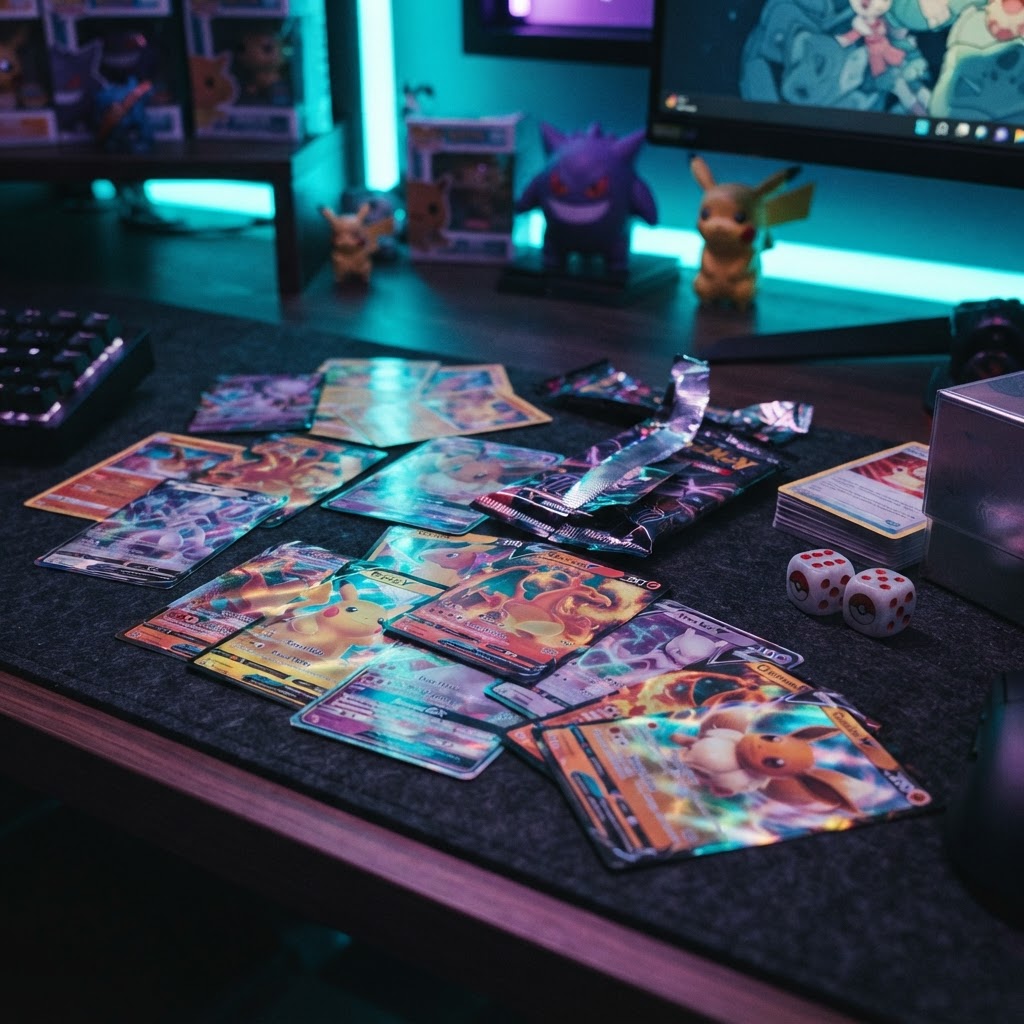
How to Play Pokemon TCG: A Beginner's Guide to Rules, Turns, and Strategy

Learning the Pokemon Trading Card Game is an exciting journey that bridges the gap between collecting cards and competitive play. Whether you have just started building your deck or want to understand the game mechanics behind your favorite pulls, mastering the basics is essential. This guide covers everything from the setup to the final prize card.
Setting the Stage for Battle
Preparing the Play Area
To begin a game, you need a 60-card deck and a playmat. Shuffle your deck, flip a coin to decide who goes first, and draw seven cards. Place six cards face-down as your Prize cards, which you collect as you knock out your opponent's Pokemon.
The Starting Pokemon
Choose one Basic Pokemon from your hand to be your Active Pokemon. Place up to five other Basic Pokemon on your Bench. If you have no Basic Pokemon in your starting hand, shuffle and draw again, allowing your opponent to draw an extra card as a penalty.
Understanding the Turn Structure
The Sequence of Play
Each turn follows a specific order of operations designed to keep the game balanced. You must draw one card to start your turn, then perform various actions to build your field and prepare for an attack.
Essential Turn Actions
- Play Basic Pokemon from your hand onto your Bench.
- Evolve your Pokemon if they have a stage ready.
- Attach one Energy card to any of your Pokemon.
- Play Trainer cards to draw cards or heal damage.
- Retreat your Active Pokemon for a benched one.
Navigating Combat and Damage
Attacking and Weakness
Attacking is the core of your strategy to win the game. When you attack, you must satisfy the Energy requirements listed next to the move. Always check the Weakness and Resistance of the defending Pokemon to calculate the final damage output.
Tracking Damage Counters
Use damage counters to keep track of how much health your Pokemon has lost. Once a Pokemon’s damage exceeds its HP, it is knocked out and sent to the discard pile. You then take a prize card for every Pokemon you successfully knock out.
Comparing Card Roles in Play
| Card Type | Primary Function | Interaction | | :--- | :--- | :--- | | Pokemon | Attack and defend | Battles opponents | | Energy | Power attacks | Attached to Pokemon | | Trainer | Support and utility | Used once then discarded |
Avoiding Common Rookie Mistakes
Managing Your Resources
New players often over-extend their bench or attach energy to the wrong Pokemon too early. Avoid the temptation to fill your bench with weak Pokemon, as they can become easy targets for your opponent. Understanding when to save your Trainer cards is vital for long-term survival.
Strategic Energy Placement
Never attach energy to a Pokemon unless you have a clear plan for it to attack. Energy cards are finite resources per turn, and wasting them can leave your primary attacker stranded without support. Check out /blog/trainer-energy-support-cards-deck-building-guide for tips on optimizing your engine.
Always remember that the objective is to take all six prize cards, not just to knock out every opposing Pokemon on the field.
The Shift to Digital Play
Transitioning to Online Platforms
Many players now practice their skills by collecting cards online before hitting the table. Platforms like Tilt Rips allow you to experience the thrill of opening packs, which can help you identify high-value cards for your deck. This digital approach is perfect for beginners looking to build a collection quickly.
Why Digital Rips Matter
Digital pack opening allows you to see a wider variety of cards than you might find in local stores. For those interested in the excitement of the hunt, sites like Tilt Rips provide a great environment. You can read more about this at /blog/packs-review-online-pokemon-card-rips to understand the appeal.
Frequently Asked Questions
How many prize cards do I start with?
You start the game with six prize cards placed face-down. You claim these cards one by one as you knock out your opponent's active or benched Pokemon.
Can I play more than one supporter card per turn?
You are restricted to playing only one Supporter card during your turn. Plan your move carefully to ensure you use the most beneficial card for your situation.
What happens if I run out of cards in my deck?
If you cannot draw a card at the beginning of your turn because your deck is empty, you lose the game immediately. Always keep an eye on your deck size during long matches.
Get Started Today
Ready to test your luck and start building your collection? Head over to Tilt Rips and use referral code U7S8AJ3V to earn a free pack today and jumpstart your journey.
Grab This Deal
Earn a Free Pack Today!
Enter this code at signup — the bonus won't apply without it.