Is Your Collection Real? The Ultimate Guide to Spotting Fake Pokemon Cards
Navigating the secondary market for trading cards can be treacherous if you do not know the signs of a counterfeit. Whether you are buying vintage gems or modern pulls, protecting your investment requires a sharp eye and knowledge of printing standards. Learning to identify these fakes is essential for every serious enthusiast.
Understanding the Basics of Card Authenticity
Why Counterfeits Are Proliferating
As the popularity of the hobby grows, so does the incentive for scammers to produce mass-market fakes. These replicas often target popular chase cards or vintage holos to deceive unsuspecting buyers. Understanding the manufacturing process helps you distinguish between authentic products and low-quality knockoffs.
The Importance of Due Diligence
Before you invest in your collection, you must be able to verify your items properly. If you are unsure about the legitimacy of a card, it is often safer to purchase from trusted sources or engage in safer alternatives. For a secure experience, you can try online pack ripping on EpicPull to build your collection with confidence.
Visual Inspection: The First Line of Defense
Analyzing Surface Texture
Modern ultra-rare cards usually feature a distinct, intricate texture pattern across the surface. If a full-art or rainbow rare card feels completely smooth or waxy, it is almost certainly a counterfeit. Authentic cards utilize complex micro-etching that is notoriously difficult for bootleggers to replicate accurately.
Examining Card Backing and Coloration
The back of a real Pokemon card features a specific swirl of blue and purple ink patterns. Counterfeits often use a washed-out, blurry, or single-shade blue that lacks depth. Compare your card against a known authentic specimen to notice discrepancies in color saturation and logo clarity.
Testing for Physical Inconsistencies
The Light Test and Structural Integrity
While you should never damage your cards, professional collectors often check the opacity of the card stock. Genuine cards are made of high-quality card stock with a black layer in the center that prevents light from passing through easily. Fakes often allow significant light transmission when placed against a bright flashlight.
Common Red Flags to Watch For
- Incorrect spelling errors on card text or attacks
- Missing copyright dates or trademark symbols
- Unusual card dimensions or rounded corners
- Lack of authentic glossy finish on the card face
- Poorly centered artwork that is shifted off-frame
Comparing Real Versus Fake Characteristics
Understanding Material Differences
| Feature | Authentic Card | Counterfeit Card | | :--- | :--- | :--- | | Surface | Textured micro-etching | Flat and waxy finish | | Card Back | Rich purple and blue hues | Pale or inconsistent colors | | Light Test | Opaque and dense | Translucent or thin | | Edges | Clean and sharp | Rough or jagged cuts |
Essential Authentication Tips for Every Collector
Utilizing Magnification Tools
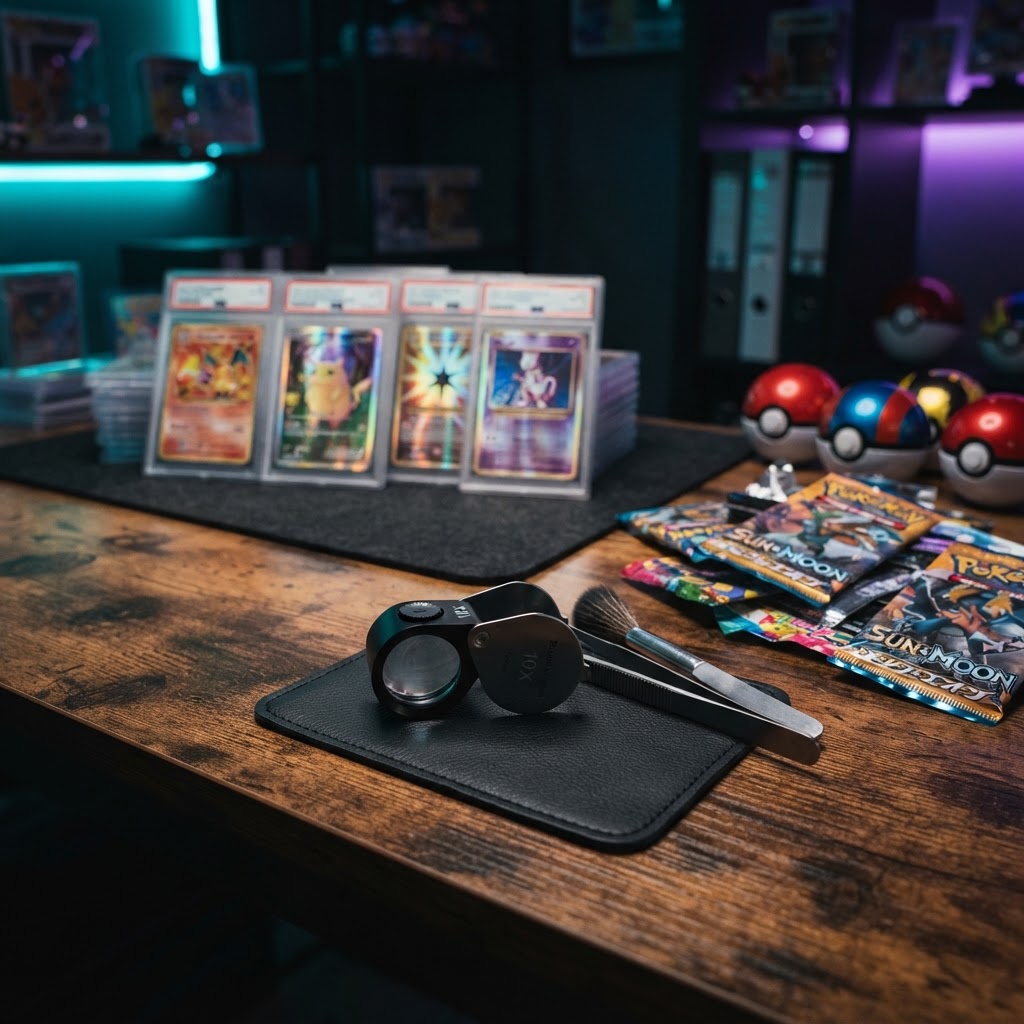
Using a jeweler's loupe or a high-quality magnifying glass can reveal the printing method used. Authentic cards utilize a high-quality lithographic process that creates uniform patterns, whereas fakes often show visible dot-matrix patterns from cheap printers. This is a gold standard method for identifying high-quality forgeries.
Trusting Your Instincts
If a deal seems too good to be true, it likely is. Market prices for rare cards are widely known, and sellers rarely offload legitimate high-value items at deep discounts. When in doubt, lean on the expertise of communities or use Raw vs Graded Pokemon Cards: A Collector's Guide to Maximizing Value and Condition to understand the grading standards that keep the hobby authentic.
Always remember that a card is only as valuable as its authenticity; never risk your budget on questionable listings without verifying the seller's reputation first.
Frequently Asked Questions
Can I use the rip test to check authenticity?
No, the rip test is destructive and will permanently ruin your card regardless of whether it is real or fake. Never tear your cards as a method of verification.
Why do some fake cards look so convincing?
Modern printing technology allows scammers to produce high-resolution copies that mimic colors well. However, they consistently fail to replicate the holographic patterns and tactile texture of authentic cards.
Are all cards from third-party sites fake?
Not necessarily, but you must be careful where you shop. Using established platforms like EpicPull ensures that you are interacting with legitimate product pulls rather than risking your money on suspicious individual listings.
Start Your Collection Safely
Protect your collection by staying informed and avoiding risky secondary market transactions. Sign up for EpicPull today and use referral code PokeCardRipper to receive 500 gems after your first 10 dollar purchase to start pulling authentic cards safely.
Grab This Deal
Recieve 500 gems after your first $10 purchase
Open online boxes, win incredible finds, and build your dream collection with cards shipped right to your door.
Enter this code at signup — the bonus won't apply without it.